
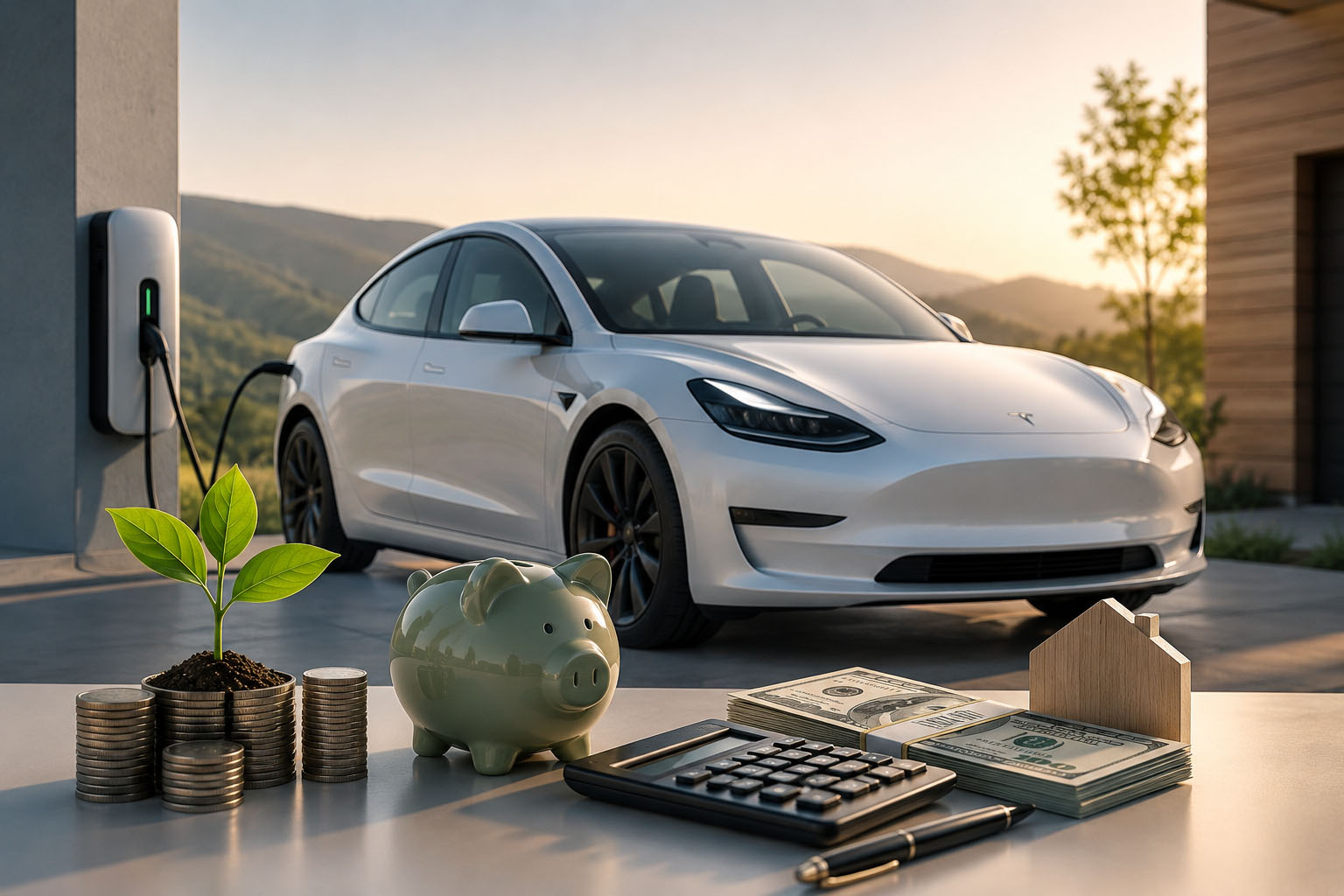
Shopping for a Tesla in 2026 feels different than it did two years ago. The federal EV tax credit that once knocked $7,500 off a purchase is gone, and the leasing loophole that quietly passed savings to buyers closed with it. But the story isn't over. A new car loan interest deduction worth up to $10,000, Tesla's own promotional financing rates, and a patchwork of state and local rebates have replaced the old playbook. Understanding EV tax credit rules and Tesla financing options together — rather than chasing an incentive that no longer exists — is how you actually maximize savings this year.
What Happened to the Federal EV Tax Credit?
The federal EV tax credit — up to $7,500 for a new electric vehicle and $4,000 for a qualifying used one — expired for any vehicle acquired after September 30, 2025. The One Big Beautiful Bill Act ended the Inflation Reduction Act's clean vehicle credits roughly seven years ahead of their original schedule. If you signed a binding purchase agreement and made a payment on or before that deadline, you may still be able to claim the old credit on delivery, but for nearly every Tesla buyer shopping today, that credit simply is not on the table anymore.
That single change reshaped how people think about EV tax credit and Tesla financing decisions. Instead of one large purchase incentive, savings in 2026 come from a mix of smaller, stackable pieces: a federal tax deduction, manufacturer financing promotions, and state-level programs. None of them match the old $7,500 credit on its own, but combined they can still meaningfully lower your total cost of ownership.
The $10,000 Loan Interest Deduction for Teslas
The most significant replacement is a new above-the-line deduction created by the same legislation that ended the purchase credit. Buyers who finance a new vehicle can now deduct up to $10,000 per year in car loan interest on Schedule 1-A, for tax years 2025 through 2028, without itemizing. The catch is eligibility: the vehicle must be new, have final assembly in the United States, weigh under 14,000 pounds, and be financed with a first-lien loan originated after December 31, 2024.
Every current Tesla model qualifies on the assembly requirement, since Model 3, Model Y, Model S, Model X and Cybertruck are all built at Tesla's Fremont, California or Austin, Texas plants. The deduction phases out at a 20% rate once modified adjusted gross income exceeds $100,000 for single filers or $200,000 for joint filers, so higher earners will see a reduced benefit or none at all. Because this is a deduction rather than a credit, your actual savings equal the deducted interest multiplied by your marginal tax rate — for many buyers that lands somewhere between a few hundred and a couple thousand dollars a year, not a dollar-for-dollar $10,000 reduction in tax owed.
The Lease Loophole Is Closed — What Replaced It
For much of 2023 through 2025, savvy shoppers used what's commonly called the EV lease loophole. Because the leasing company technically owned the vehicle, it could claim a commercial clean vehicle credit that ignored the assembly and battery-sourcing rules that applied to direct buyers, then pass some or all of that $7,500 value through as a lower monthly payment. That pathway ended for any vehicle acquired after September 30, 2025, alongside the purchase credit. If you see a script or forum post describing this as a current option, it's describing something that no longer exists.
With the loophole gone, leasing a Tesla in 2026 comes down to fundamentals again — money factor, residual value, and mileage allowance — compared honestly against buying with financing. That's where a true side-by-side calculation matters more than it used to. Running both scenarios through a car loan calculator lets you see the real monthly payment and total interest for a financed purchase, so you can compare it against a lease quote using actual numbers instead of guesswork.
Home Charging Credits: A Closing Window
The federal Section 30C credit covered 30% of the cost of home EV charging equipment and installation, up to $1,000, for property in eligible census tracts. That credit expired for equipment placed in service after June 30, 2026. If your Wall Connector or other Level 2 charger was installed and operational before that date, you can still claim it using IRS Form 8911 on your return — but new installations after the cutoff no longer qualify unless Congress renews the program. Some utilities and states run their own separate charger rebates that remain active even where the federal credit has lapsed, so it's worth checking your utility's website before assuming charging-related savings are gone entirely.
State and Local Rebates Still Fill Some of the Gap
Roughly a dozen states continue to offer their own EV incentives, separate from anything at the federal level, with some programs worth up to several thousand dollars depending on income and vehicle price. California, Colorado, New Jersey, and Illinois are among the states that have kept active rebate or tax credit programs, though funding for these programs can run out mid-year and eligibility rules shift often. Many electric utilities layer additional rebates on top — for the vehicle purchase itself, for home charging equipment, or for enrolling in an off-peak charging rate plan. Because state programs change on a rolling basis, confirm current funding and eligibility directly on your state energy office or utility website before you finalize a purchase.
What Are Tesla's Incentives for Buying in 2026?
With the federal purchase credit gone, Tesla has leaned more heavily on its own promotional financing to keep vehicles affordable. Rates change frequently and vary by trim, but recent 2026 offers have included subsidized APR financing well below typical auto loan rates on Model 3 and Model Y, occasional zero-due-at-signing options, and stackable programs like the Everyday Heroes discount for military, first responders, medical workers, students, and teachers. Tesla's referral program can also add perks on top of a financing deal. Because these promotions shift month to month and by region, always check Tesla's own incentives page and your local inventory before assuming a specific rate applies to the trim you want.
The practical lesson for 2026 buyers: Tesla is now more likely to hold firm on sticker price and instead discount the cost of borrowing. That makes comparing the promotional APR against a standard loan rate — and running both through the numbers — more important than it was when a flat federal credit did most of the work for you.
Will Tesla Offer 0% Financing in 2026?
Tesla has offered 0% APR financing on select Model 3 and Model Y trims at various points throughout 2026, typically requiring a minimum down payment and a shorter loan term such as 60 or 72 months. These promotional rates are trim-specific, time-limited, and subject to credit approval, and they have moved up and down over the year as Tesla adjusts pricing strategy — a 0% offer on one trim can shift to a low but non-zero rate within weeks. There's no guarantee a 0% deal will be available on the specific model and trim you want at the moment you're ready to buy, so treat any advertised 0% rate as a snapshot rather than a standing offer, and confirm current terms directly with Tesla before you finalize.
Comparing Your Real Options Before You Sign
Between a promotional APR, a standard auto loan, the car loan interest deduction, and any remaining state rebate, the number of variables affecting your true cost has grown rather than shrunk since the federal credit disappeared. A 0% promotional rate on a higher-priced trim can sometimes cost more in total than a slightly higher rate on a lower-priced trim once you factor in the interest deduction and any stackable rebates. The most reliable way to compare scenarios is to model each one — different APRs, loan terms, and down payments — with a car loan calculator that shows the full amortization schedule, not just the advertised monthly payment.
Before signing, confirm three things: that your Tesla trim qualifies for the interest deduction (it should, given US assembly), what promotional APR is actually available on your specific configuration this month, and whether your state or utility still runs an active rebate. Getting those three answers first turns a confusing incentive landscape into a straightforward comparison.
Frequently Asked Questions
What is the $10,000 loan interest deduction for Teslas?
It is a new federal tax deduction, created by the One Big Beautiful Bill Act, that lets buyers deduct up to $10,000 per year in interest paid on a qualifying new vehicle loan for tax years 2025 through 2028. To qualify, the vehicle must be new, have final assembly in the United States, weigh under 14,000 pounds, and be financed with a first-lien loan originated after December 31, 2024. Every current Tesla model qualifies on assembly, since all are built in Fremont, California or Austin, Texas. The deduction phases out for single filers earning over $100,000 MAGI ($200,000 for joint filers) and does not require itemizing.
What are the Tesla incentives for buying vehicles in 2026?
Tesla's 2026 incentives center on its own promotional financing rather than a federal purchase credit, since that expired in September 2025. Recent offers have included reduced APR financing on Model 3 and Model Y trims, occasional zero-due-at-signing options, the Everyday Heroes discount for military, first responders, medical workers, students, and teachers, and referral program perks. These offers change by trim, month, and region, so check Tesla's current incentives page before buying.
Will Tesla offer 0% financing in 2026?
Tesla has offered 0% APR financing on select Model 3 and Model Y trims at various points during 2026, usually with a minimum down payment and a set loan term. These promotional rates are trim-specific and time-limited, and they have shifted up and down throughout the year, so a 0% rate available today is not guaranteed to still be available when you're ready to buy. Confirm the current rate for your specific trim directly with Tesla before finalizing a purchase.
Is the federal EV tax credit still available in 2026?
No. The federal EV tax credit of up to $7,500 for new vehicles and $4,000 for used vehicles expired for any vehicle acquired after September 30, 2025. The only exception applies to buyers who signed a binding written purchase contract and made a payment on or before that date, even if delivery occurred after.
Is the EV leasing loophole still an option?
No. The commercial clean vehicle credit that funded the leasing loophole ended for vehicles acquired after September 30, 2025, the same date as the purchase credit. Leasing a Tesla in 2026 no longer includes a pass-through federal credit, so lease terms should be compared on their own merits against financing.
Can I still get a tax credit for a home EV charger?
Only if it was installed and operational before the deadline. The federal Section 30C credit, worth 30% of equipment and installation costs up to $1,000, expired for chargers placed in service after June 30, 2026. Chargers installed before that date in an eligible census tract can still be claimed on Form 8911. Some state and utility programs offer separate charger rebates that remain active.
Are there state rebates for buying a Tesla in 2026?
Yes, in some states. Roughly a dozen states, including California, Colorado, New Jersey, and Illinois, continue to run their own EV rebate or tax credit programs independent of the federal government. Eligibility and funding vary and can run out mid-year, so confirm current details on your state energy office or utility website before purchasing.
How do I compare a Tesla lease against financing without the tax credit?
Without the old federal credit or lease loophole, compare both options on their real numbers: monthly payment, total interest paid, and residual value for a lease versus the full amortization schedule for a loan, including any benefit from the car loan interest deduction. A car loan calculator that models different APRs and terms makes this comparison concrete instead of relying on advertised payments alone.
Ready to Run Your Own Numbers?
Use LoanRateCheck's free calculator to model your Tesla payment at different APRs and loan terms — including how the interest deduction affects your true cost — all in one place, with no registration required.
Open the Calculator →