

Most people spend more time picking a car colour than understanding their vehicle financing terms. That's exactly what dealers and lenders count on. With the average car payment now sitting at record highs — over $730 per month for new vehicles — the difference between a good deal and a costly mistake often comes down to knowing three things: how auto financing is actually structured, how to evaluate an auto finance company, and which numbers you should calculate before anyone quotes you a monthly payment.
Key Takeaways
- The average car payment for new vehicles exceeded $730/month in 2024 — a record.
- Dealer financing is often the most expensive option, not the most convenient.
- Your credit score can swing your APR by 5–10 percentage points on the same vehicle.
- Pre-approval from a credit union or bank puts you in control before you walk in.
- A free car loan calculator shows your real cost — use it before you negotiate.
The Average Car Payment Is Higher Than Most Buyers Realise
According to data from the Federal Reserve's consumer credit report, total outstanding auto loan debt in the US has surpassed $1.6 trillion. The average car payment on a new vehicle is around $730 per month, and around $525 for used. These figures reflect longer loan terms — 72- and 84-month loans now make up a large share of originations — which keep monthly payments manageable on paper but dramatically inflate total interest cost. A $40,000 vehicle financed over 84 months at 8% APR generates over $12,000 in interest alone. Knowing the average car payment for your loan size helps you benchmark any offer before you sign.
What distorts these averages even further is the growing inclusion of add-ons rolled into the loan balance — extended warranties, GAP insurance, paint protection packages — items that dealers often present as standard but are entirely optional. Each one increases your financed amount, which increases your monthly payment, your total interest, and the term length required to keep the payment "affordable." Before you interpret any monthly payment figure a dealer gives you, ask for the out-the-door price and the total amount financed. Those two numbers tell the real story.
How Vehicle Financing Actually Works — and Where the Profit Hides
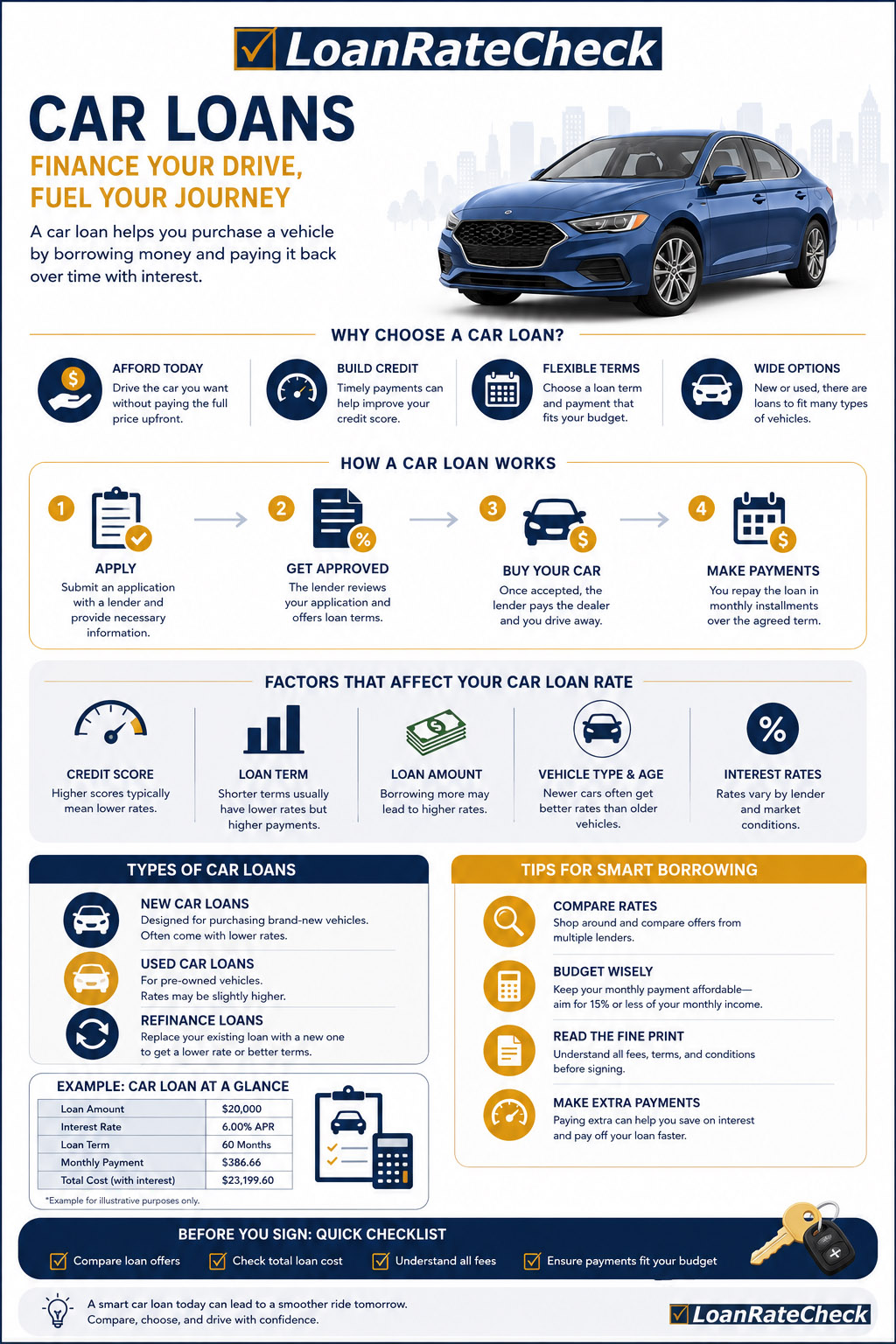
Vehicle financing is, at its core, a loan secured by the car itself. You borrow a sum (vehicle price plus taxes, fees, and any add-ons, minus your down payment and trade-in), agree to repay it over a fixed term with interest, and the lender holds the title until the balance is paid. Simple enough — but the structure creates several places where profit is quietly extracted. The most common is the interest rate markup. When you finance through a dealership, the dealer contacts multiple lenders, receives rate quotes, and typically adds 1–2.5 percentage points on top before presenting the offer to you. The Federal Trade Commission notes this practice, known as "dealer reserve," as a recurring consumer concern. You pay the inflated rate; the dealer pockets the spread.
The second profit point is term extension. Stretching from 60 to 84 months reduces your monthly payment noticeably, which makes the transaction feel more affordable. But auto financing over longer terms means you are paying interest for two additional years on a depreciating asset. By month 18 of an 84-month loan, many buyers owe more than the car is worth — a position called negative equity that becomes a real problem if you need to sell, trade in, or the vehicle is totalled. Understanding these mechanics puts you in the driver's seat during any negotiation.
Choosing the Right Auto Finance Company: Banks, Credit Unions, and Dealers
Not all lenders are equal, and choosing the right auto finance company is one of the highest-leverage decisions you'll make in the entire purchase process. You have three primary options: your bank or an online lender, a credit union, or the dealership's finance office. Each has a different incentive structure. Banks and online lenders compete on rate and clarity — they disclose APR upfront, offer pre-approval without requiring a vehicle selection first, and have no markup incentive. The CFPB recommends getting pre-approved from at least one outside lender before visiting a dealership.
Credit unions consistently offer the most competitive auto loan rates across credit tiers — often 1–2 percentage points below what a comparable bank offers, and sometimes 3–4 points below dealer financing. If you're not already a member of a credit union, many allow you to join at the point of loan application. The trade-off is slightly more paperwork and a less seamless experience compared to one-stop dealer financing. For most borrowers, that inconvenience is worth thousands of dollars in savings. When evaluating any auto finance company, compare the full APR, not the monthly payment. A lower monthly payment achieved through a longer term is not a better deal — it's a more expensive one stretched thinner.
Hidden Costs That Inflate Your Auto Loan Balance
The advertised vehicle price is rarely what you finance. Between the sticker and the signed contract sit a range of costs that can add $2,000–$8,000 to your loan balance without feeling significant in the moment. Sales tax alone — typically 5–10% of the purchase price — adds $2,000–$4,000 on a $40,000 vehicle. Title and registration fees vary by state but often run $200–$700. Dealer documentation fees — charged for processing paperwork — range from $85 to over $900 depending on the state and dealership. According to Edmunds, buyers who don't itemise dealer fees often overpay by $500–$1,500 on closing costs alone.
Then come the F&I office add-ons: GAP insurance (which covers the difference between what you owe and what the car is worth if it's totalled), extended warranties, paint and fabric protection, tyre and wheel coverage. Some of these products have genuine value; many are overpriced compared to alternatives available outside the dealership. GAP insurance, for instance, typically costs $400–$700 through a dealer's finance office — the same product is available from most insurers for $20–$40 per year added to your auto policy. Each add-on that gets rolled into your loan balance compounds through interest across the entire loan term. A $700 GAP policy financed at 8% over 72 months costs closer to $950 in real terms by the time it's paid off.
What Really Drives Your Auto Financing Interest Rate
Your APR on an auto loan is determined by a combination of factors — some within your control, some not. Credit score is the largest single variable: a buyer with a 780 score may qualify for 4.5% on a new car; a buyer with a 620 score at the same dealership, on the same vehicle, might be quoted 12–15% or higher. That spread can translate to $6,000–$10,000 in additional interest on a $35,000 loan over 60 months. Beyond credit score, lenders assess your debt-to-income ratio, employment stability, and whether you have a down payment. Vehicle age matters too — most lenders apply rate penalties for vehicles older than five to seven years, and some won't finance high-mileage used cars at all. According to Bankrate's auto loan rate data, average rates by credit tier currently range from around 5% (excellent credit, new car) to over 20% (deep subprime, used car).
Check current auto financing rates from top lenders here — comparing at least three APR quotes before accepting any financing offer is one of the simplest, highest-return actions a car buyer can take. Even a 1% APR reduction on a $32,000 loan over 60 months saves roughly $850 in total interest. At 2%, that's closer to $1,700. The time investment to get competing quotes is typically under an hour.
Using a Car Loan Calculator Before You Negotiate
One of the biggest mistakes buyers make is walking into a dealership without a clear sense of what a fair monthly payment looks like for their specific loan amount and term. Dealers know this — and the conversation almost always gets framed around "how much can you afford per month?" rather than "what is the total price of this vehicle?" Using a car loan calculator before you shop flips this dynamic entirely. You enter your target vehicle price, down payment, estimated APR, and term — and get back not just the monthly payment but total interest, total loan cost, and a full amortization schedule showing exactly how the balance declines over time.
That amortization schedule is particularly valuable during trade-in negotiations. It tells you precisely what you'll owe at any given month — so if a dealer offers a trade-in value that's less than your projected remaining balance, you can identify the negative equity position immediately rather than discovering it buried in a new contract. According to LendingTree, buyers who pre-calculate their payments and obtain outside pre-approval save an average of $1,400 on their auto loans compared to buyers who rely solely on dealer financing. Run your numbers first — then negotiate from a position of knowledge rather than hope.
Auto Financing Options: Side-by-Side Comparison
Vehicle Financing Sources Compared
| Lender Type | Typical APR Range | Pre-Approval | Rate Markup Risk | Best For |
|---|---|---|---|---|
| Credit Union | 4.5% – 9% | Yes | None | Best overall rate — any credit tier |
| Bank / Online Lender | 5% – 12% | Yes | None | Convenience, existing relationship |
| Dealership (Captive) | 0%* – 14%+ | At purchase only | High (dealer reserve) | Manufacturer promo rates (excellent credit only) |
| Buy-Here-Pay-Here | 18% – 29%+ | Yes (on lot only) | Very High | Last resort — severely damaged credit |
* 0% APR manufacturer promotions require excellent credit (typically 750+) and may forgo cash rebates that would reduce the purchase price. Always calculate total cost both ways using our car loan calculator.
Five Vehicle Financing Strategies That Actually Save Money
1. Get Pre-Approved Before You Shop
Walking into a dealership with a pre-approval letter from a credit union or bank sets a rate ceiling for dealer financing. The dealer may beat it to win the business — in which case you get a better rate — or they cannot, in which case you use your pre-approval. Either way, you are negotiating the price of the vehicle independently from the financing, which is where dealers prefer to blend the two to obscure total cost.
2. Make a Meaningful Down Payment
A down payment of at least 20% on a new vehicle and 10% on a used vehicle keeps your loan balance in positive equity territory through the depreciation-heavy early months. It also reduces the amount financed, shrinking both your monthly payment and total interest paid. If cash is limited, a trade-in vehicle applied at fair market value (verify with Kelley Blue Book before visiting the dealer) achieves the same effect.
3. Choose the Shortest Term You Can Afford
The monthly payment difference between a 60-month and a 72-month loan on $30,000 at 7% APR is about $67. The total interest difference is over $1,700. Choosing the shorter term costs you less than $2.25 per day — but saves you a meaningful sum and eliminates two years of debt and depreciation risk. Use the amortization schedule in our auto loan calculator to compare terms side by side before deciding.
4. Negotiate Price, Not Payment
Always negotiate the out-the-door vehicle price separately from the financing terms. When negotiations happen around a monthly payment number, dealers have enormous flexibility to extend terms, increase rates, or add products that preserve their margin while appearing to accommodate your budget. Fix the price first, then discuss financing separately. This single discipline removes the most common mechanism by which auto financing costs are inflated.
5. Shop the F&I Products Separately
Everything sold in the finance and insurance office — GAP coverage, extended warranties, tyre and wheel protection — is available elsewhere, usually at significantly lower cost. GAP insurance through your auto insurer typically costs a fraction of the dealer price. Extended warranties are available from third-party administrators at competitive rates. Review each product on its individual merits, price it independently, and decline anything you can source more affordably outside the transaction.
Whether you are financing a new vehicle, shopping used, or refinancing an existing loan, the principles of smart auto financing remain the same: know your numbers before anyone else quotes them, compare lenders rather than accepting the first offer, and evaluate the total cost of the loan rather than the monthly payment in isolation. Vehicle financing is a significant long-term commitment — treating it with the same scrutiny you apply to any major financial decision will consistently produce better outcomes. The right auto finance company, the right term, and a well-timed pre-approval can easily save $3,000–$8,000 over the life of a typical auto loan. That's money worth spending thirty minutes to protect.
Frequently Asked Questions
What is the average car payment in the US right now?
The average car payment for a new vehicle is approximately $730 per month, and around $525 for used vehicles, based on 2024 industry data. These figures reflect elevated vehicle prices, higher interest rates compared to 2020–2021, and a trend toward longer loan terms (72–84 months) that keep payments lower on paper while increasing total interest cost significantly.
How do I choose the best auto finance company?
Start with your credit union or an established online lender for a pre-approval before visiting any dealership. Credit unions consistently offer the most competitive APRs across all credit tiers. Compare the full APR — not just the monthly payment — from at least three lenders, including the dealership's best offer, before making a final decision. The Consumer Financial Protection Bureau offers free guidance on comparing auto loan offers.
What credit score do I need for good auto financing rates?
A score of 720 or above typically qualifies for competitive rates in the 5–7% range on new vehicles. Scores between 660 and 719 generally see rates of 7–10%. Below 660, rates climb sharply — often 12–20% or higher. Improving your credit score before applying, even by 30–40 points, can meaningfully reduce your APR and save thousands over the loan term.
Is 0% APR vehicle financing actually a good deal?
0% APR promotions are genuinely valuable — but only if you would have qualified for a significant cash rebate on the same vehicle and chose not to take it. Manufacturers often require buyers to forgo a $1,500–$4,000 rebate in exchange for 0% financing. Use a car loan calculator to compare: take the rebate and apply it to your down payment, then finance at a competitive outside rate, and compare total cost against the 0% offer. The rebate route often wins.
Should I finance through the dealership or my bank?
Financing through your bank or credit union gives you a known, transparent APR with no markup. Dealer financing runs through third-party lenders with a dealer reserve spread typically adding 1–2.5%. That said, dealerships occasionally offer manufacturer-subsidised promotional rates that beat outside lenders. The safest approach is to obtain a bank or credit union pre-approval first, then let the dealer attempt to beat it.
How much should I put down on a car loan?
A down payment of 20% is recommended for new vehicles and 10% for used vehicles. These thresholds keep you in positive equity — owning more than you owe — through the initial high-depreciation period. A larger down payment also reduces your financed balance, your monthly payment, and your total interest paid. If you lack the cash for a full down payment, a trade-in vehicle at fair market value achieves the same balance reduction.
Can I pay off my car loan early to save on interest?
Yes — most standard auto loans allow early payoff without penalty, and doing so eliminates all remaining interest charges on the paid-off balance. Even small additional monthly principal payments accelerate payoff and reduce total interest. Confirm your loan has no prepayment penalty (this should be in the loan agreement) before making extra payments. Adding $100/month to a 60-month $28,000 loan at 7% saves approximately $650 in interest and pays the loan off about five months early.
What is GAP insurance and do I need it for vehicle financing?
GAP (Guaranteed Asset Protection) insurance covers the difference between what you owe on your auto loan and what your car is worth if it is totalled or stolen. It is most valuable when you have financed a large percentage of the vehicle's value — particularly on new cars in the first two years when depreciation is steepest. If you need it, buying GAP through your auto insurer typically costs $20–$40 per year — a fraction of the $400–$700 charged by dealership finance offices for the same coverage.
Ready to Run Your Own Numbers?
Use LoanRateCheck's free car loan calculator to model your payment and explore your full amortization schedule — all in one place, with no registration required.
Open the Car Loan Calculator →