
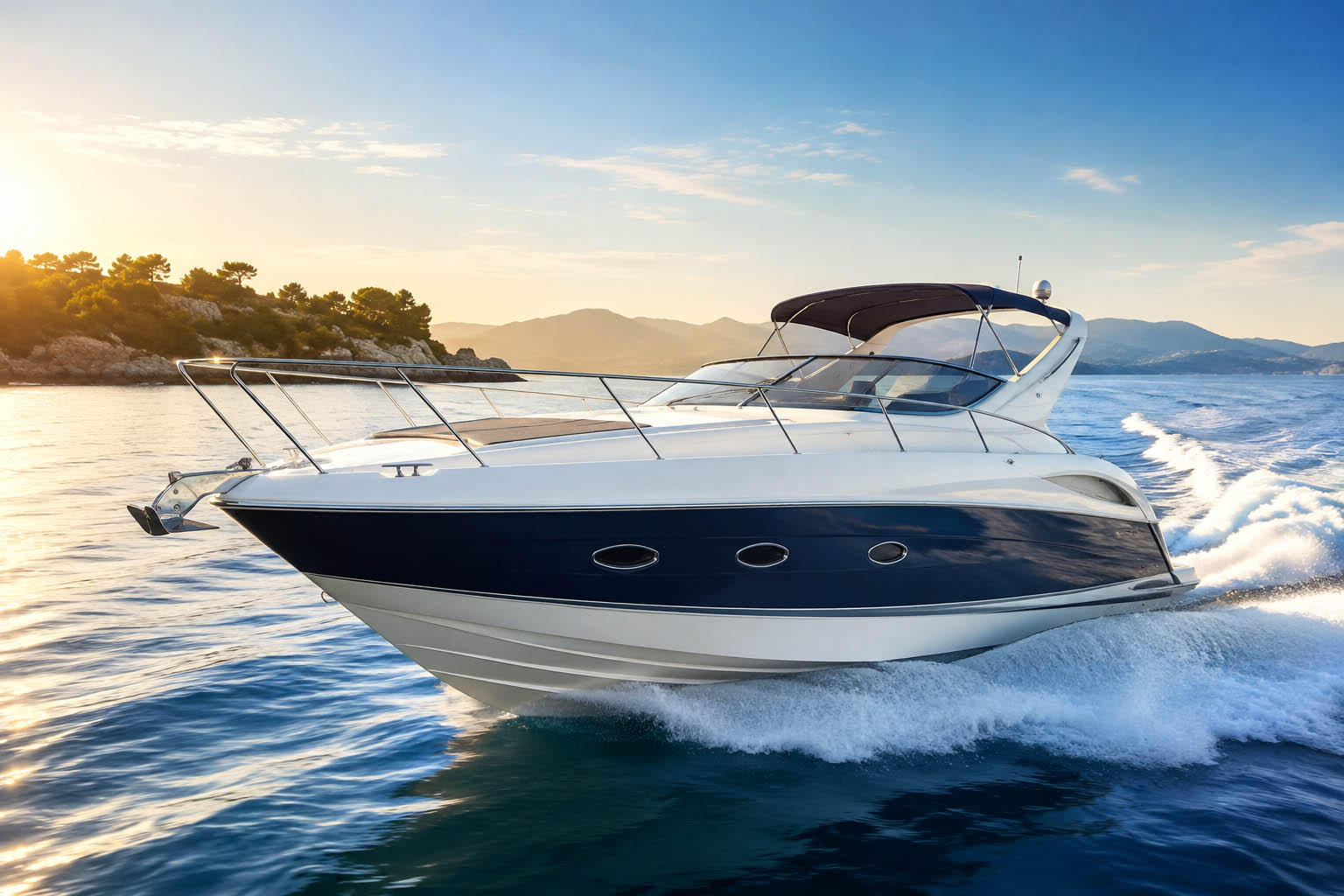
Buying a boat feels simple until you start comparing financing offers. A boat loan works much like an auto loan, but lenders weigh a few extra factors — vessel age, down payment size, and whether the loan is secured or unsecured. Boat loan interest rates in 2026 typically run higher than mortgage rates but can rival or beat car loan pricing for well-qualified buyers. Before you sign anything, it helps to understand how lenders evaluate your application and what your estimated boat payments will realistically look like each month.
Key Boat Loan Types: Secured vs. Unsecured
Most marine lenders offer two main paths to financing: secured and unsecured boat loans. A secured boat loan uses the vessel itself as collateral, similar to how a mortgage uses your house. Because the lender has something to repossess if you default, secured loans typically carry lower boat loan interest rates and allow longer repayment terms — sometimes stretching to 15 or 20 years for larger purchases. This structure keeps monthly payments manageable even on a six-figure yacht purchase.
An unsecured boat loan is essentially a personal loan with no collateral attached. Lenders take on more risk, so they charge higher rates and cap loan amounts and terms — usually five to seven years maximum. The upside is speed and flexibility: there's no lien filed against the boat, no marine survey requirement in most cases, and funding can arrive within a day or two. Unsecured financing tends to make the most sense for smaller purchases, older boats that don't qualify for secured terms, or buyers who want to avoid a lien entirely.
Lenders like a lightstream boat loan program market themselves specifically toward unsecured financing with fast approval and rate discounts for autopay enrollment, while credit unions such as a navy federal boat loan product often lean toward secured lending with member-only pricing. Comparing at least three offers — one bank, one credit union, and one online marine lender — is the single best way to see where your actual rate will land before you commit.
Important Requirements: Down Payment, Credit Score, Vessel Age
Three factors shape nearly every boat loan approval decision. Your down payment matters most on secured loans: expect to put down 10-20% for a newer boat, and lenders may require 20% or more once the vessel's value drops or its age increases. A larger down payment shrinks your loan-to-value ratio, which typically unlocks a meaningfully better rate.
Your credit score is the second major lever. Borrowers with scores above 740 generally see the most competitive boat loan interest rates, often in the mid-to-high 6% range on secured loans. Scores in the 660-739 range still qualify at most lenders but land closer to 8-9%, while sub-620 applicants face double-digit rates or may need to pursue unsecured financing through a personal loan lender instead.
Vessel age is the factor unique to boat financing. Many secured lenders cap loan terms based on how old the boat will be by the end of the repayment period — a 20-year term on a brand-new boat might shrink to 10 years or less on a boat that's already 10 years old. Older vessels may also require a marine survey and sea trial before approval, adding time and a few hundred dollars in upfront cost to the process.
Is a Boat Loan a Good Idea?
Whether a boat loan makes sense depends on how the payment fits your broader budget, not just whether you can technically afford the monthly bill. Boats depreciate quickly — often 20-30% in the first few years — and unlike a home or car, a boat isn't essential transportation, which makes it a genuinely discretionary debt. Financing can still be a smart move if it lets you preserve cash reserves for emergencies while locking in a fixed, predictable payment instead of draining savings on a single purchase.
Where a boat loan becomes a poor idea is when the payment, insurance, storage, fuel, and maintenance combined push past what you'd comfortably spend without straining other financial goals. A reasonable rule many marine finance advisors suggest: total boating costs, including your loan payment, shouldn't exceed roughly 10% of your take-home pay if you already carry a mortgage or other significant debt. Running your numbers through a boat loan calculator before shopping gives you a realistic monthly figure to compare against your actual budget.
How Difficult Is It to Get a Boat Loan?
For buyers with steady income, a credit score above 660, and a reasonable down payment, approval is typically straightforward — many online marine lenders offer same-day or next-day pre-qualification with only a soft credit check. The process gets more involved for larger loans, older vessels, or first-time boat buyers, since lenders may request proof of income, boat insurance binder, and a marine survey before final funding. Buyers with limited credit history or a high debt-to-income ratio often find approval easier through an unsecured personal loan rather than traditional marine financing.
Are Boat Loans Cheaper Than Car Loans?
Boat loan interest rates generally run higher than new car loan rates, largely because boats depreciate faster and have a smaller resale market, which increases lender risk. Where a strong-credit borrower might see auto rates in the 5-6% range, that same borrower typically sees boat loan rates a point or two higher, often 6.5-9% depending on the lender and loan structure. That said, boat loans often win on term length — a 15 or 20-year secured boat loan spreads the cost far more than a typical 5-7 year auto loan, which can make the monthly payment lower even at a higher rate.
How Much Is a Payment on a $30,000 Boat?
Take a $30,000 loan amount with a 10% down payment already applied. At a 7.5% interest rate over a 10-year secured term, the estimated monthly payment lands around $356. Stretch that same loan to a 15-year term at a slightly higher 8% rate — common once the loan-to-value ratio and term length both increase — and the payment drops to roughly $287 per month, though total interest paid climbs meaningfully over the longer window.
Credit profile changes these estimated boat payments significantly. A borrower with excellent credit securing a rate closer to 6.5% on a 10-year term would pay approximately $340 monthly, while a borrower with fair credit facing a 10% rate on the same term would see payments near $397. This is exactly why running your own numbers matters more than relying on a single average: term length, rate, and down payment size each move the final figure independently.
| Term | Rate | Est. Monthly Payment* |
|---|---|---|
| 10 years | 6.5% | $340 |
| 10 years | 7.5% | $356 |
| 10 years | 10.0% | $397 |
| 15 years | 8.0% | $287 |
*Estimates based on a $30,000 loan amount after down payment. Actual boat loan interest rates vary by lender, credit score, and vessel age.
The fastest way to see your own numbers is to run them through a dedicated boatloancalculator rather than relying on generic averages. LoanRateCheck's free tool lets you adjust loan amount, term, down payment, and rate instantly, so you can compare a 10-year versus 15-year term or model how an extra $50 a month toward principal shortens your payoff timeline. Since boat loan interest rates shift with the broader rate environment, checking current quotes from two or three lenders before finalizing your term is always worth the extra ten minutes.
For further reading on consumer lending protections that apply to marine financing, the Consumer Financial Protection Bureau publishes guidance on comparing loan offers and understanding APR disclosures, and the Discover Boating resource center covers ownership costs beyond the loan itself, including insurance and storage.
Frequently Asked Questions
Is a boat loan a good idea?
It can be, if the total cost of ownership — loan payment, insurance, storage, fuel, and maintenance — fits comfortably within your budget alongside your other financial obligations. Financing preserves cash reserves and locks in a predictable payment, but because boats are discretionary and depreciate quickly, it's worth running the full cost through a boat loan calculator before committing rather than focusing on the monthly payment alone.
How difficult is it to get a boat loan?
Approval is generally straightforward for buyers with a credit score above 660, steady income, and a reasonable down payment, with many lenders offering same-day pre-qualification. Larger loans, older vessels, and first-time buyers may face additional steps like a marine survey or income verification, and buyers with weaker credit often find unsecured personal loan options easier to qualify for than traditional secured marine financing.
Are boat loans cheaper than car loans?
Boat loan interest rates typically run higher than new car loan rates because boats depreciate faster and have a thinner resale market. However, boat loans often offer much longer terms — up to 15 or 20 years versus 5-7 years for most auto loans — which can result in a lower monthly payment even though the rate itself is higher.
How much is a payment on a $30,000 boat?
On a $30,000 loan, estimated boat payments generally range from about $287 to $397 per month depending on your credit score, term length, and interest rate. A 10-year term at 7.5% lands near $356 monthly, while stretching to a 15-year term can lower the payment to roughly $287, though total interest paid increases over the longer term.
What's the difference between a secured and unsecured boat loan?
A secured boat loan uses the vessel as collateral, which typically unlocks lower rates and longer terms but requires a lien and sometimes a marine survey. An unsecured boat loan, common with lenders like a lightstream boat loan program, skips the collateral requirement in exchange for a higher rate and a shorter maximum term, usually five to seven years.
Ready to Run Your Own Numbers?
Use LoanRateCheck's free boat loan calculator to model your monthly payment across different terms, rates, and down payments — all in one place, with no registration required.
Open the Boat Loan Calculator →