
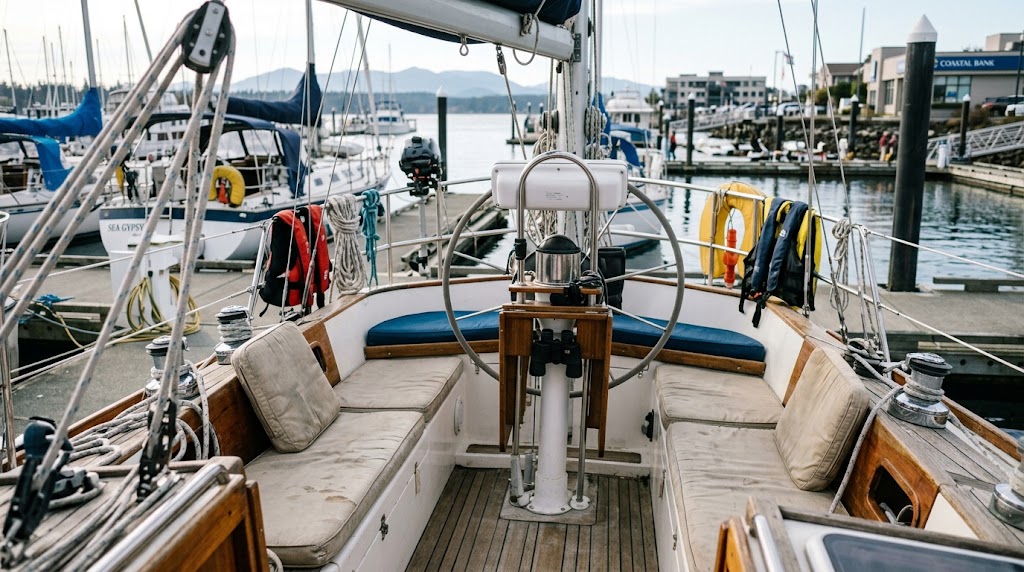
Can you really get a loan for a boat you plan to live on full time? Yes, but the answer depends on who you ask. Many banks treat a liveaboard as a risky vessel, while specialist marine lenders may approve it with the right paperwork. This guide explains how lenders view a primary-residence boat, what age limits apply, how boat loan rates compare with other options, and how to preview estimated boat payments with a boat loan calculator before you ever talk to a loan officer.
Can I Get a Loan for a Liveaboard Boat?
Yes, you can get a loan for a liveaboard boat, but the path is narrower than for a weekend cruiser. Most mainstream banks write marine loans assuming recreational use, so a borrower who says the vessel is a full-time home triggers extra questions about insurance, marina agreements, and resale value. Specialist marine lenders and some credit unions are more comfortable with the idea, especially for sailboats and trawlers with a proper galley and head. Expect boat financing rates to land a bit higher than on a standard recreational loan, because the lender prices in the added uncertainty.
Why Banks Hesitate to Finance a Floating Home
Lenders hesitate for practical reasons. A house sits on land that tends to hold value; a boat depreciates, moves, and can sink. Liveaboard insurance costs more and often requires a recent marine survey. Marinas may cap the number of permanent residents, which affects where the vessel can legally stay. If you default, repossessing a floating home is far messier than taking back a jet ski. Those risks push boat lending rates up and tighten approval standards, so a larger down payment, strong credit, and a clean survey carry real weight.
What Lenders Usually Want to See
Every lender sets its own bar, but marine underwriters tend to look for the same core items before quoting boat loan rates:
- Credit score: commonly in the mid-600s or higher, with the best pricing reserved for 700+.
- Down payment: often 10%–20% of the purchase price, sometimes more for older vessels.
- Debt-to-income ratio: generally below roughly 40%–45% including the new payment.
- Marine survey: an independent inspection of the hull, engine, and systems.
- Proof of insurance and a slip: a written marina agreement showing where the boat will live.
- Clear ownership records: state registration or federal vessel documentation.
Be upfront about liveaboard use. Policies written for recreational boating can be challenged if the insurer learns you are living aboard, and a loan application that hides the intent can create problems later. A transparent borrower with a documented plan is easier for a lender to price. Before you apply, run a quick estimate with our boat loan calculator so you already know your target budget and can compare boat loan rates with confidence.
Is It Hard to Get Financed for a Boat?
It is harder than financing a car, but far from impossible. Boats are discretionary purchases, so underwriters lean heavily on credit history and income stability. Applicants with scores around 700 or higher usually see the most competitive boat loan rates, while lower scores can still qualify with a bigger down payment or a shorter term. Loan size matters too: many lenders prefer deals above a minimum amount because small loans cost nearly as much to process. Self-employed sailors should prepare two years of tax returns and recent bank statements.
What Is the Oldest Boat a Bank Will Finance?
Age is where many liveaboard dreams hit a wall. As a general pattern, lenders will often finance boats up to roughly 15 to 20 years old, and some stretch to 25 or even 30 years for larger, well-maintained vessels backed by a clean marine survey. A common rule links vessel age to loan term, so an older boat usually means a shorter payoff and higher estimated boat payments. Policies differ widely between lenders, so treat these numbers as typical ranges, not promises, and ask each bank directly before paying for a survey.
Options When Your Boat Is Too Old for a Marine Loan
If your dream boat is older than a lender's cutoff, you still have choices. Credit unions and marine-specialty lenders sometimes make exceptions for classic builds with documented refits. A larger down payment shortens the term and reduces risk. Some buyers turn to a home equity line or a personal loan instead, accepting different boat financing rates in exchange for flexibility. Whatever route you pick, a thorough survey is your best negotiating tool, because it proves the hull, engine, and systems are sound and gives the lender something concrete to underwrite.
Comparing Your Financing Options
| Option | Typical Term | Rate Picture | Key Trade-Off |
|---|---|---|---|
| Marine boat loan | 10–20 years | Usually higher than mortgage rates | Boat is collateral; age limits apply |
| Home equity line (HELOC) | Draw period, then repayment | Often lower, frequently variable | Your house secures the debt |
| Personal loan | Commonly 3–7 years | Often higher, but fixed | Unsecured, no boat age limit, bigger monthly payment |
| Cash-out refinance | 15–30 years | Tied to current mortgage rates | Resets your home loan, closing costs apply |
No option wins for everyone. A marine loan keeps the debt tied to the vessel, while home-based borrowing may offer lower boat lending rates but puts your property on the line. Compare total cost, not only the monthly figure, and keep every offer in writing so you can line them up side by side.
Estimated Boat Payments: Run the Numbers Before You Apply
Before applying, preview your estimated boat payments with our free boat loan calculator. Enter the purchase price, down payment, interest rate, and term, and you will see the monthly cost, total interest, and a full amortization schedule. Because boat lending rates shift with credit and vessel age, run several scenarios instead of one. Compare a 15-year and a 20-year term, then test what a one-point rate difference does. Real figures turn a vague dream into a budget you can defend in front of a loan officer.
Example: $120,000 Boat Loan at 8.5%
| Loan Term | Monthly Payment | Total Interest (approx.) |
|---|---|---|
| 15 years | $1,182 | $92,700 |
| 20 years | $1,041 | $129,900 |
These figures are illustrative, not an offer. Stretching the term trims the monthly bill by about $140 but adds roughly $37,000 in interest. That is why estimated boat payments alone never tell the whole story. Liveaboards also carry costs a mortgage-style budget tends to forget: slip fees, insurance, haul-outs, maintenance, fuel, and utilities. Add those to your loan payment before deciding what you can truly afford, and test each scenario again whenever a lender quotes new boat loan rates.
Could the Interest Be Tax Deductible?
One more factor worth checking is taxes. The IRS explains that a boat can qualify as a home for the mortgage interest deduction when it has sleeping, cooking, and toilet facilities and the loan is secured by the boat. Limits and conditions apply, so read IRS Publication 936 and confirm the details with a tax professional. A deduction should never drive the purchase, but it may slightly improve the real cost of your boat loan rates.
A Smart Pre-Approval Checklist
Preparation is the cheapest way to improve boat financing rates. Check your credit reports for errors, gather income documents, and line up a marina slip that allows permanent residents. Request quotes from at least three lenders, including one marine specialist and one credit union, and ask each about maximum vessel age, liveaboard policy, and prepayment penalties. Save every quote, then compare them in the calculator. Lenders respond well to organized borrowers, and a complete file can be the difference between a polite decline and a competitive offer.
Frequently Asked Questions
Can I get a loan for a liveaboard boat?
Yes. Marine-specialty lenders and some credit unions finance liveaboards, usually with stricter requirements and slightly higher boat financing rates than for recreational boats. Expect to provide a survey, insurance, and a marina agreement.
Is it hard to get financed for a boat?
It is harder than a car loan because boats are discretionary and depreciate. Strong credit, a 10%–20% down payment, and steady income make approval far more likely, and they also earn better boat loan rates.
What is the oldest boat a bank will finance?
Many lenders cap eligible boats at roughly 15 to 20 years old, while some finance 25 to 30 years for larger, well-surveyed vessels. Older boats typically get shorter terms, so policies vary and you should ask each lender.
How do I estimate boat payments?
Enter the price, down payment, rate, and term into a boat loan calculator. It shows estimated boat payments, total interest, and an amortization schedule, so you can compare different terms before applying.
Do boat lending rates change for a primary residence?
They can. Because lenders see a liveaboard as higher risk, boat lending rates are often somewhat higher than on a recreational loan. Credit score, down payment, boat age, and loan size all influence the final rate.
Ready to Run Your Own Numbers?
Use LoanRateCheck's free boat loan calculator to model your estimated boat payments and explore your full amortization schedule — all in one place, with no registration required.
Open the Calculator →