
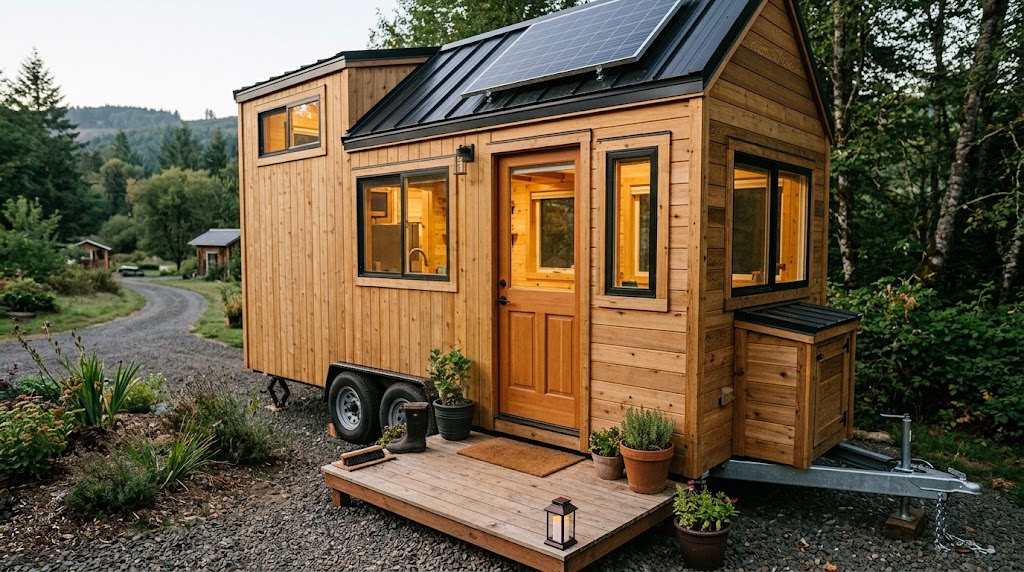
A personal loan for tiny home projects can put you under your own roof without a bank appraisal, a mortgage lien, or weeks of waiting. Because most lenders will not write a mortgage on a house that rolls on wheels, many buyers turn to an unsecured personal loan instead. This guide explains how personal installment loans work, what a fixed rate personal loan really costs, which credit score for personal loan approval to aim for, and when other personal financing options beat a personal loan.
What Is a Non-Traditional Loan, and Why Do Tiny Homes Need One?
A non-traditional loan is any financing that skips the standard mortgage model of a fixed-address house, a professional appraisal, and a lien recorded against land. Tiny homes on wheels rarely count as real property, so mortgage underwriters have little to evaluate. That gap pushes buyers toward a personal loan for tiny home purchases, where the lender judges you rather than the building. An unsecured personal loan treats your income, debts, and credit history as the real collateral, which makes personal financing simple on paper but demanding on your budget.
A foundation-built tiny house on owned land can sometimes qualify for a construction loan or a mortgage. A home on a trailer usually cannot, because lenders see movable property that is hard to repossess and resell. Park models, container builds, and DIY shells land in the same gray zone. If your build sits there, an unsecured personal loan offers a straightforward path. Personal installment loans with a fixed rate personal loan structure keep the monthly payment predictable from the first day to the last.
Why a Personal Loan for Tiny Home Buyers Works
No Collateral Needed
An unsecured personal loan does not require you to pledge the tiny home, the trailer, or any land. If you stop paying, the lender cannot simply take your house on wheels, although it can pursue collections and damage your credit. That separation matters for buyers whose homes are hard to classify. It also keeps ownership simple, since the title and registration stay entirely yours. Removing the collateral hurdle is exactly why a personal loan for tiny home projects feels so much easier than a mortgage, and why personal financing without liens appeals to so many builders.
Fast Funding
Speed is another reason borrowers choose personal installment loans. Many online lenders return a decision within minutes and deposit funds within one to seven business days, which helps when a builder offers a limited production slot or a used model appears on the market. A fixed rate personal loan also locks your payment on day one, so you can plan the build budget with confidence. Fast approval still depends on documents being ready and on a credit score for personal loan lenders consider strong.
No Appraisals Required
Traditional lenders need an appraiser to confirm a home's market value, and comparable sales for tiny homes are scarce. That is where mortgage-style lending stalls. A personal loan for tiny home buyers skips the step, because an unsecured personal loan is underwritten on your income, debt-to-income ratio, and credit report instead. You save the appraisal fee, avoid valuation disputes, and sidestep the risk of a low appraisal derailing the purchase. This kind of personal financing is judged on you, not on the structure you plan to live in.
Flexible Use of Funds
Lenders rarely restrict how you spend personal installment loans, so one loan can cover several costs. You might fund the shell, solar panels, appliances, a used trailer, utility hookups, delivery, or permits. This flexibility is valuable because tiny home budgets mix purchase and setup expenses. Just remember that a fixed rate personal loan charges interest on every dollar, including the small extras, so borrow only what the project truly needs. Smart personal financing means matching the loan amount to a written, line-by-line budget before you apply.
Loan Terms and a Simulated Example
Most unsecured personal loan offers run from two to seven years, with amounts from roughly $1,000 to $100,000 depending on the lender. Your rate depends on income, existing debts, and the credit score for personal loan underwriting that the lender applies. Borrowers with excellent credit often see single-digit rates, while fair credit can push pricing past 20%. The example below assumes a 12% APR fixed rate personal loan, a figure chosen for illustration, not a quote. Test your own numbers in our personal loan calculator to see how each variable changes the outcome.
| Loan Term | Monthly Payment | Total Interest Paid | Total Cost of Loan |
|---|---|---|---|
| 3 years (36 months) | $1,495 | $8,807 | $53,807 |
| 5 years (60 months) | $1,001 | $15,060 | $60,060 |
| 7 years (84 months) | $794 | $21,727 | $66,727 |
The trade-off is easy to see. Stretching the term from 36 to 84 months cuts the payment by about $700, yet adds nearly $13,000 in interest. For a personal loan for tiny home construction at this size, the five-year middle option often balances affordability and cost. Personal installment loans reward borrowers who choose the shortest term their budget can carry, because an unsecured personal loan accrues interest on the full balance until it is repaid.
What Credit Score Do You Need?
Lenders price personal installment loans by risk, so your credit score for personal loan approval shapes everything. Scores of 670 and above generally qualify for competitive offers, 740 and above often unlock the lowest advertised rates, and scores below 600 may face denial or very high pricing. Check your reports free at AnnualCreditReport.com and review the CFPB credit score guidance before applying. Raising your credit score for personal loan eligibility by even 30 points can lower a fixed rate personal loan payment noticeably.
Financial Risks and Drawbacks
Higher Interest Rates
Because an unsecured personal loan has no collateral behind it, lenders charge more than they would on a mortgage. Rates on personal installment loans commonly run several points above secured home financing, and borrowers with weaker credit can pay far more. On a $45,000 balance, each extra percentage point adds thousands of dollars over the term. Compare offers using APR, not just the headline rate, and include origination fees, which commonly range from one to ten percent. A personal loan for tiny home buyers is convenient, but convenience carries a price.
Short Repayment Windows
Mortgages stretch across thirty years, while personal installment loans rarely exceed seven. Shorter terms mean higher monthly payments, and a payment that looked affordable on a spreadsheet can strain your budget after utilities, land rent, insurance, and maintenance. Choose a fixed rate personal loan only if the payment fits comfortably, with room for surprise repairs. Responsible personal financing starts with a payment you can sustain through a job change or a slow month.
Strict Qualification
Underwriters of an unsecured personal loan look closely at your credit score, debt-to-income ratio, employment history, and cash reserves. Applicants with thin credit or recent delinquencies may face denial, a smaller amount than requested, or a co-signer requirement. Large tiny home budgets amplify scrutiny on personal installment loans, since a $50,000 request is a serious commitment. Pre-qualification tools use a soft inquiry, so you can compare offers without hurting your credit score for personal loan applications. Formally apply only to your top choices to limit hard credit pulls.
Alternative Financing Options for Tiny Homes
RV Loans
If your tiny home is certified by the RV Industry Association and built on a trailer, an RV loan may beat a personal loan. These secured loans often offer lower rates and terms of ten to twenty years because the home itself serves as collateral. Lenders usually want certification, a builder invoice, and a down payment. The trade-off is repossession risk, which unsecured personal installment loans avoid. Weigh the longer RV term against the flexibility of a personal loan for tiny home projects, and an unsecured personal loan's higher rate against its freedom from liens.
Chattel Loans
A chattel loan finances movable personal property, which describes many tiny homes perfectly. The home secures the loan, but no land or mortgage recording is involved. Terms often run fifteen to twenty years, and rates typically fall between an unsecured personal loan and a traditional mortgage. Down payments of 10% to 20% are common. Compared with personal installment loans, chattel financing can reduce the monthly cost, although fees and repossession risk deserve a careful read before you sign. Any personal financing contract deserves a full review.
Builder Financing
Some tiny home builders offer in-house payment plans or partner with lenders, which can streamline the purchase. Terms vary widely, and promotional rates may expire. Ask for the APR, total cost, fees, prepayment rules, and whether the plan is a true loan or a rent-to-own agreement. Compare it against a fixed rate personal loan from an outside lender, since cash buyers using personal installment loans sometimes receive a builder discount, and ask whether your builder accepts a personal loan for tiny home payments.
HELOCs
If you already own a house, a home equity line of credit lets you borrow against equity at rates usually below an unsecured personal loan. HELOCs typically carry variable rates and a draw period followed by repayment, and your existing home secures the debt, so default could put it at risk. The CFPB explains how a HELOC works. Compared with a fixed rate personal loan, a HELOC may cost less but offers less certainty. Weigh this personal financing choice carefully against personal installment loans.
| Option | Collateral | Typical Term | Rate Type | Best For |
|---|---|---|---|---|
| Personal loan | None | 2–7 years | Usually fixed | Speed and flexibility |
| RV loan | The tiny home | 10–20 years | Usually fixed | Certified homes on wheels |
| Chattel loan | The tiny home | 15–20 years | Fixed or variable | Movable homes without land |
| Builder financing | Varies | Varies | Varies | One-stop purchases |
| HELOC | Your existing home | Draw, then repay | Usually variable | Current homeowners |
How to Apply the Smart Way
Start by pulling your credit reports and fixing errors, since a higher credit score for personal loan offers means lower interest. Next, set a firm budget and test several terms in our unsecured personal loan calculator. Pre-qualify with three lenders, compare APRs and fees, and read the full contract before accepting. A fixed rate personal loan that fits your monthly budget with room to spare is the safest version of personal financing.
Final Thoughts
A personal loan for tiny home financing is not always the cheapest route, but it may be the simplest. With solid credit, steady income, and a payment you can afford, an unsecured personal loan can bring your build to life quickly. Compare alternatives, run the numbers, and borrow only what you need.
Frequently Asked Questions
Can I use a personal loan for tiny home financing?
Yes. Most lenders do not restrict how personal loan funds are used, so you can buy, build, or outfit a tiny home. Because the loan is unsecured, the lender evaluates your credit and income rather than the home itself.
What credit score for personal loan approval do I need?
Scores of 670 and above generally qualify for competitive offers, and 740 and above often earn the lowest rates. Scores below 600 may face denial or very high pricing, so check your reports before applying.
Is an unsecured personal loan cheaper than an RV or chattel loan?
Usually not. Secured options such as RV loans and chattel loans often have lower rates and longer terms, but they put the tiny home at risk of repossession. A personal loan costs more but needs no collateral and funds faster.
How much would a fixed rate personal loan cost on a $45,000 tiny home?
At a 12% fixed APR over five years, the payment is about $1,001 per month, with roughly $15,060 in total interest and a total cost near $60,060. Shorter terms raise the payment but cut the interest.
How fast can I get funded with personal installment loans?
Many online lenders approve applications within minutes and deposit funds in one to seven business days, provided your documents are ready and your credit meets their requirements.
Ready to Run Your Own Numbers?
Use LoanRateCheck's free calculator to model your payment and explore your full amortization schedule — all in one place, with no registration required.
Open the Calculator →