
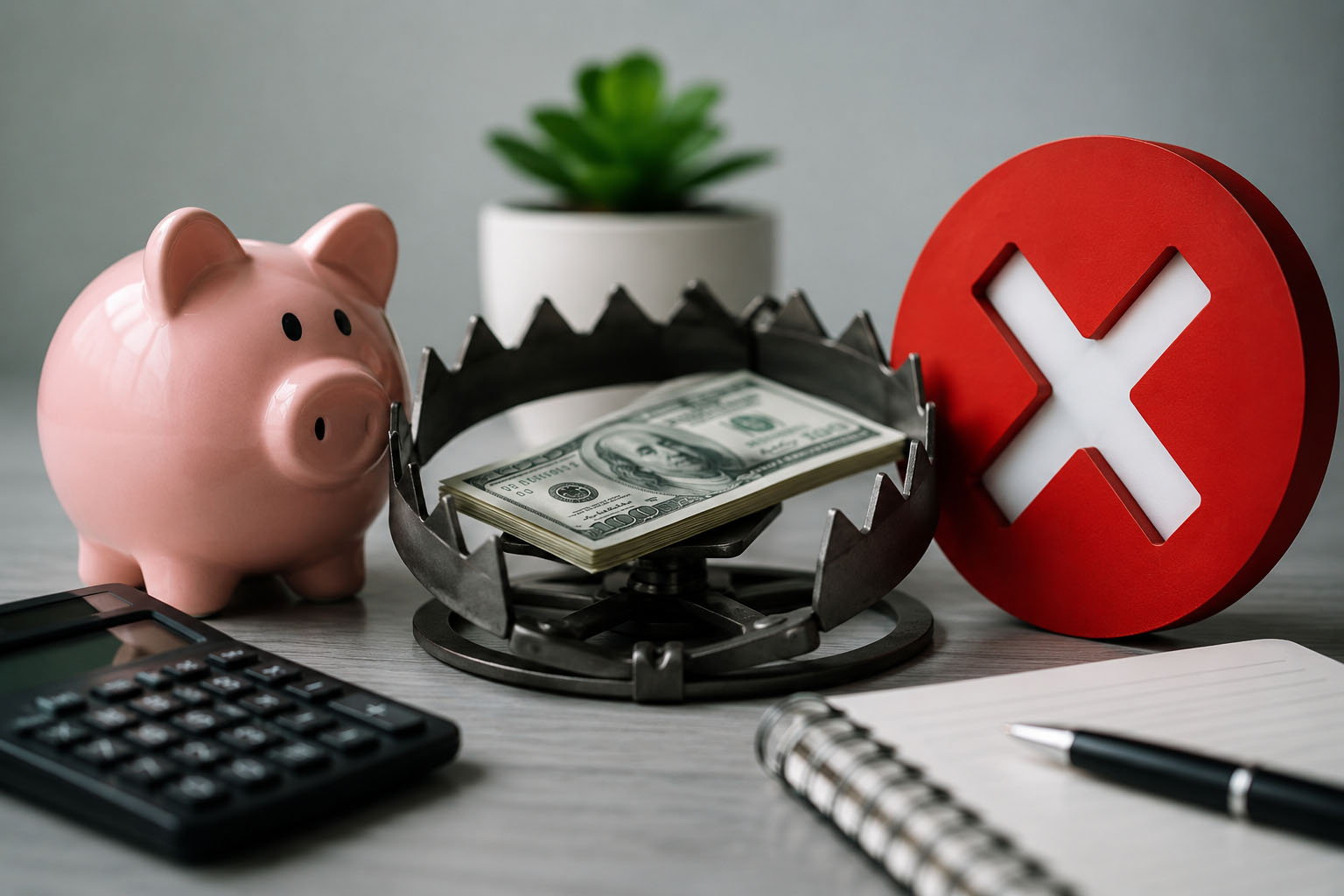
A personal loan can be one of the smartest tools in your financial toolkit — or one of the most expensive mistakes you make this year. Whether you're comparing sofi personal loan offers, browsing personal loan lenders online, or considering a personal loan for debt consolidation, the difference between a good outcome and a costly one usually comes down to five avoidable errors. Most borrowers don't realize they've made a mistake until months later, when the true cost of their personal installment loans shows up on a statement. This guide breaks down exactly what to watch for.
The 5 Critical Pitfalls to Avoid When Taking a Personal Loan
Every year, millions of borrowers apply for an unsecured personal loan to consolidate debt, cover an emergency, or fund a major purchase. Most of them compare interest rates and stop there. But the real cost of a loan is shaped by decisions made before, during, and after the application — and a handful of predictable mistakes account for the vast majority of borrower regret. Understanding these pitfalls before you sign anything can save you thousands of dollars and years of unnecessary payments.
Mistake #1: Accepting the First Offer You Get
The single most common — and most expensive — mistake is applying with one lender and accepting whatever rate they quote. Rates among personal loan lenders can vary by several percentage points for the exact same credit profile, simply because each lender weighs income, debt-to-income ratio, and credit history differently. A borrower with a 700 credit score might be quoted 11% by one online lender and 16% by another. Getting prequalified with three to five lenders, which typically uses a soft credit check with no score impact, lets you see your real options before committing to one.
Mistake #2: Borrowing More Than You Actually Need
Lenders often approve borrowers for more than they asked for, and it's tempting to take the extra cushion "just in case." This is where personal loans quietly become expensive: every additional dollar borrowed accrues interest for the full term, even if it sits untouched in a checking account. Before accepting a larger loan amount, calculate the exact figure you need — including any origination fee that gets deducted upfront — and borrow only that. A quick session with a personal loan calculator shows precisely how much extra a larger balance adds to your monthly payment and total interest paid.
What Is the Biggest Financial Mistake People Make?
Across nearly every category of consumer debt, the single biggest financial mistake is borrowing based on the monthly payment alone rather than the total cost of the loan. This mindset lets people justify amounts, terms, and rates that don't actually serve their long-term goals. It shows up constantly in personal loan applications, auto financing, and even mortgage shopping — someone comparing a us bank mortgage against other lenders, for example, needs to weigh how existing personal loan payments affect their debt-to-income ratio and future approval odds, not just today's monthly cash flow.
Mistake #3: Chasing the Lowest Monthly Payment
A low monthly payment feels responsible, but it's often achieved by stretching the loan term far longer than necessary — and that comes at a steep price. Extending a $15,000 loan from three years to six years might cut the monthly payment nearly in half, but it can roughly double the total interest paid over the life of the loan. Before choosing a term length, run the numbers side by side. A fixed rate personal loan with a shorter term and a slightly higher payment is almost always the cheaper choice overall, as long as it fits comfortably in your budget.
Mistake #4: Ignoring Hidden Fees and Fine Print
The advertised interest rate is rarely the full story. Origination fees (often 1%–8% of the loan amount), late payment penalties, and prepayment penalties on some personal installment loans can meaningfully change the real cost of borrowing. This is exactly why APR — not the base interest rate — is the number that matters when comparing offers, since APR folds fees into a single annualized figure. Always read the loan agreement in full before signing, and ask the lender directly whether prepayment penalties apply if you plan to pay the loan off early.
What Are the 3 C's for a Loan?
Lenders traditionally evaluate applicants using what's known as the 3 C's of credit: Character (your credit history and track record of repaying debt on time), Capacity (your income and debt-to-income ratio, which determines whether you can realistically afford the new payment), and Capital (your savings, assets, or down payment, which shows financial cushion beyond income alone). Understanding how lenders weigh these three factors helps explain why two people with similar credit scores can receive very different offers, and why building even one of the three C's — such as paying down existing balances to improve capacity — can unlock significantly better rates, including options for personal loans for fair credit that wouldn't otherwise qualify for prime pricing.
Mistake #5: Failing to Plan Your Repayment Strategy
Getting approved is the easy part. Too many borrowers accept a loan without mapping out exactly how each payment fits into their monthly budget, what happens if income drops, or whether autopay discounts are available to shave a fraction off the rate. A solid repayment plan includes a specific payoff date, a buffer for at least one missed paycheck, and a clear understanding of how extra payments — even small ones — accelerate payoff and cut total interest. This step matters most when the loan is being used for a personal loan for debt consolidation, since the entire point of consolidating is to end up paying less than you would across multiple scattered debts, not simply to trade several payments for one.
How Much Would a $30,000 Personal Loan Cost a Month?
The monthly payment on a $30,000 personal loan depends heavily on the interest rate and term length. At a 12% APR over 5 years, the payment lands around $667 per month, with roughly $10,000 paid in total interest. Shorten that to 3 years at the same rate and the payment rises to about $997 per month, but total interest drops to roughly $5,900 — a savings of over $4,000 for a payment increase of about $330. Because small rate and term differences swing the total cost by thousands of dollars, it's worth running your exact numbers through a personal loan calculator before signing any agreement, rather than relying on rough estimates from a lender's marketing page.
Comparing Personal Loan Lenders: What to Look For
Not every lender fits every borrower. Online lenders like a sofi personal loan program tend to offer fast funding and rate discounts for existing customers, credit unions often beat big banks on rates for members with fair-to-good credit, and traditional banks may offer relationship discounts if you already hold accounts there. When comparing offers, line up the APR, origination fee, funding speed, and any prepayment penalty side by side — the lowest advertised rate isn't always the lowest total cost once fees are factored in. According to the Consumer Financial Protection Bureau, borrowers who compare at least three offers typically secure meaningfully better terms than those who apply with a single lender.
Frequently Asked Questions
What is the biggest financial mistake people make?
The biggest financial mistake is focusing only on the monthly payment instead of the total cost of a loan. This leads borrowers to accept longer terms or larger balances than they need, which can significantly increase the total interest paid over time.
What are the 3 C's for a loan?
The 3 C's are Character (credit history and repayment track record), Capacity (income and debt-to-income ratio), and Capital (savings or assets that provide financial cushion). Lenders weigh all three when deciding whether to approve a loan and at what rate.
How much would a $30,000 personal loan cost a month?
At a 12% APR over 5 years, a $30,000 personal loan costs roughly $667 per month. Over a 3-year term at the same rate, the payment rises to about $997 per month but total interest drops by over $4,000. The exact figure depends on your rate, term, and credit profile.
Should I accept the first personal loan offer I receive?
No. Rates among personal loan lenders can vary by several percentage points for the same credit profile. Getting prequalified with three to five lenders, usually with no impact to your credit score, helps you compare real offers before committing.
Is a fixed rate personal loan better than a variable rate loan?
For most borrowers, a fixed rate personal loan is the safer choice because the payment never changes, making budgeting predictable. Variable rate loans can start lower but carry the risk of rising payments if market rates increase during the loan term.
Can I get a personal loan for debt consolidation with fair credit?
Yes. Several lenders specialize in personal loans for fair credit, though rates will typically be higher than for prime borrowers. Comparing multiple offers and considering a credit union or co-signer can help secure better terms for consolidation.
Ready to Run Your Own Numbers?
Use LoanRateCheck's free calculator to model your payment and explore your full amortization schedule — all in one place, with no registration required.
Open the Calculator →